
Hydraulic vs. Pneumatic Seal Applications: What’s the Difference?
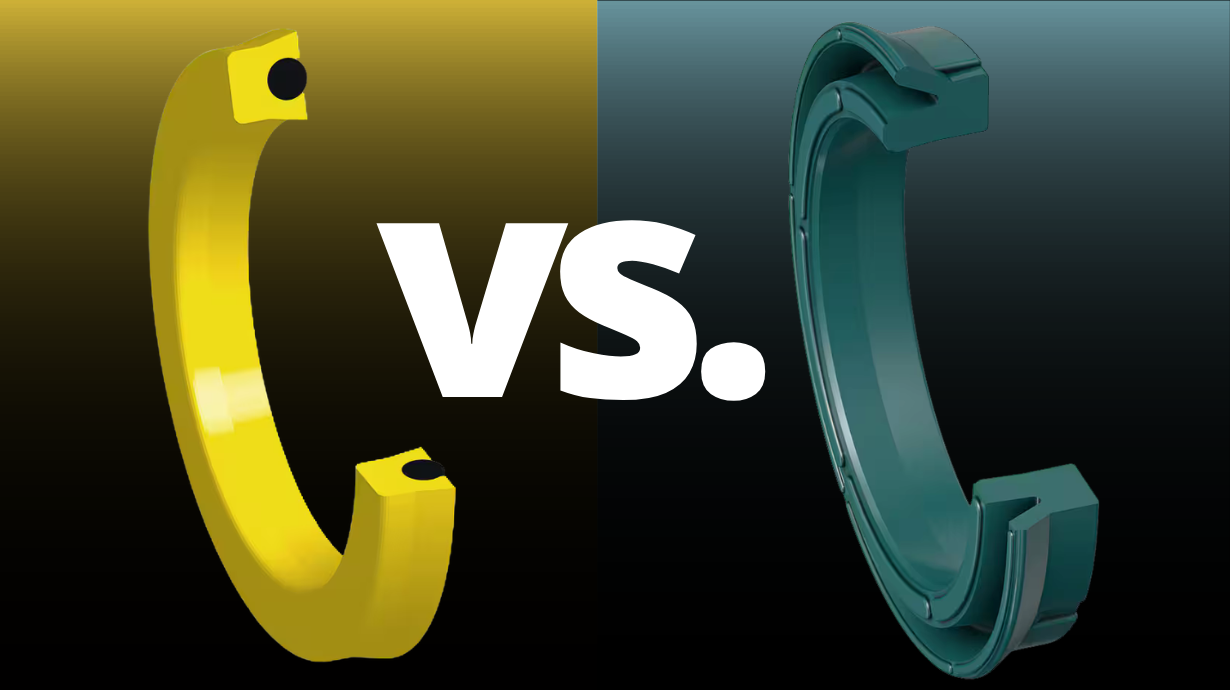
Seals are the unsung heroes of fluid power systems. They keep pressure contained, prevent leaks, and protect components from contamination. But hydraulic and pneumatic seals aren’t interchangeable, they’re engineered for different conditions. Let’s break down the differences and highlight the seal types that make these systems work.
Hydraulic Seals: Built for High Pressure
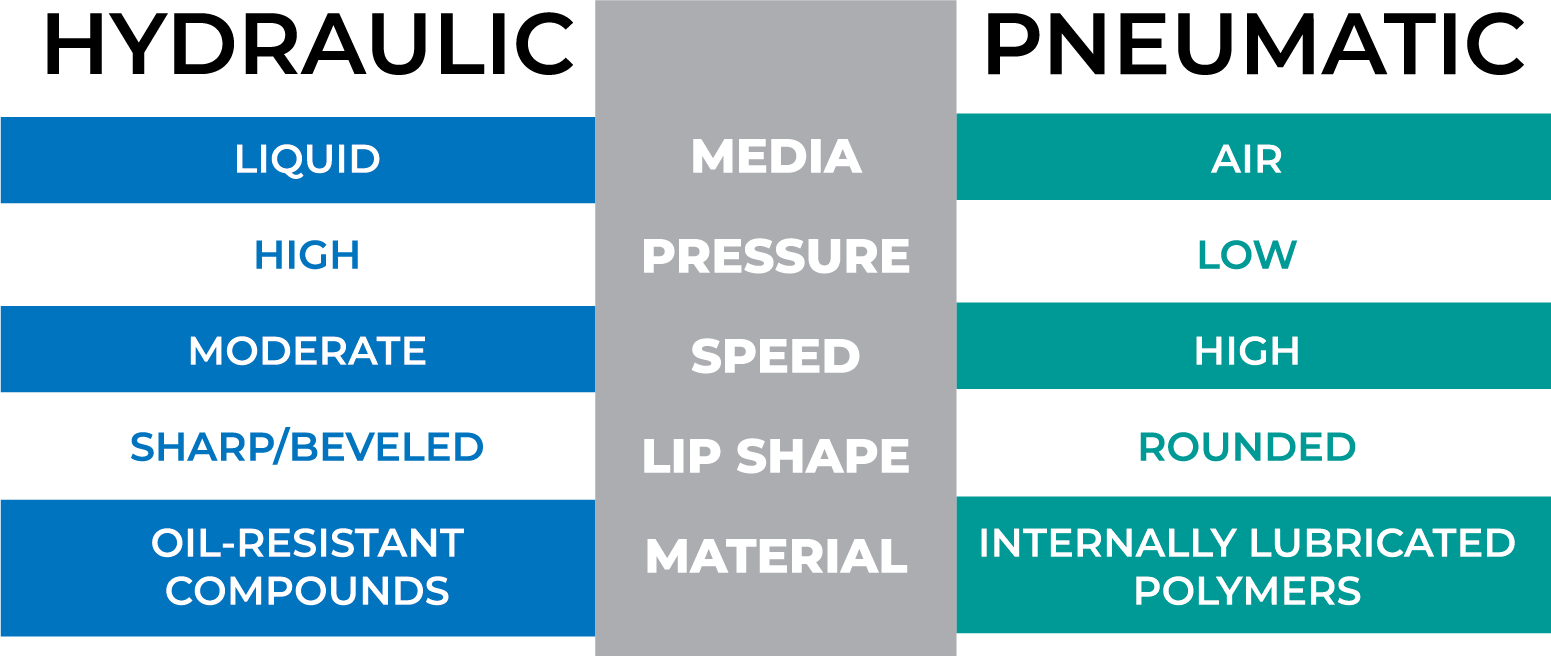
Hydraulic systems use pressurized liquid, so seals must handle extreme pressure, fluid viscosity, and harsh environments. Often using sharp or beveled lips to cut/seal the fluid.
Key Seal Types:
- Rod Seals – Engineered profiles and advanced materials ensure compatibility in high-pressure, abrasive environments, preventing fluid leakage around the rod.
- Piston Seals – Precision designs maintain pressure separation and deliver smooth motion under heavy loads.
- Wiper Seals – Rugged scrapers keep dirt and moisture out, protecting internal components from contamination.
- O-Rings – Reliable static sealing for cylinder heads and end caps, often made from oil-resistant elastomers.
- Wear Rings – Guide rods and pistons, preventing metal-to-metal contact and extending seal life in demanding conditions.
Industries: Construction equipment, manufacturing presses, aerospace landing gear.
Pneumatic Seals: Designed for Speed and Cleanliness
Pneumatic systems run on compressed air, so seals face lower pressure but at higher speeds. They need flexibility and resistance to dry running, often using internally lubricated materials to reduce friction and wear. Their rounded lip allows the seal to glide on boundary lubrication to further reduce friction and ensure smooth operation.
Key Seal Types:
- Rod Seals – Lightweight designs minimize friction for fast cycling while maintaining air-tight performance.
- Piston Seals – Dynamic profiles ensure efficient pressure separation for rapid actuation.
- Wiper Seals – Keep dust and debris out in clean environments, protecting sensitive components. Sometimes a light duty rod seal is integrated into the wiper.
- O-Rings – Provide dependable sealing in fittings and joints, optimized for air systems.
- Cushion Seals – Absorb impact at stroke ends, reducing noise and wear in high-speed applications.
Industries: Packaging automation, food & beverage (FDA-compliant), medical devices.
Choosing the Right Seal
Match your seal to system specs: pressure, speed, temperature, and environment — Use this handy decision-guide to help choose.
Bottom line: Hydraulic seals thrive under heavy loads and high pressure; pneumatic seals excel in fast, clean applications. Need help selecting the right one? Contact us, we’ll help you find the right seal for your application.
Short Code:
Credit Limit:
Current Balance:
