
4 Factors Engineers Should Consider in LSHT Motor Selection
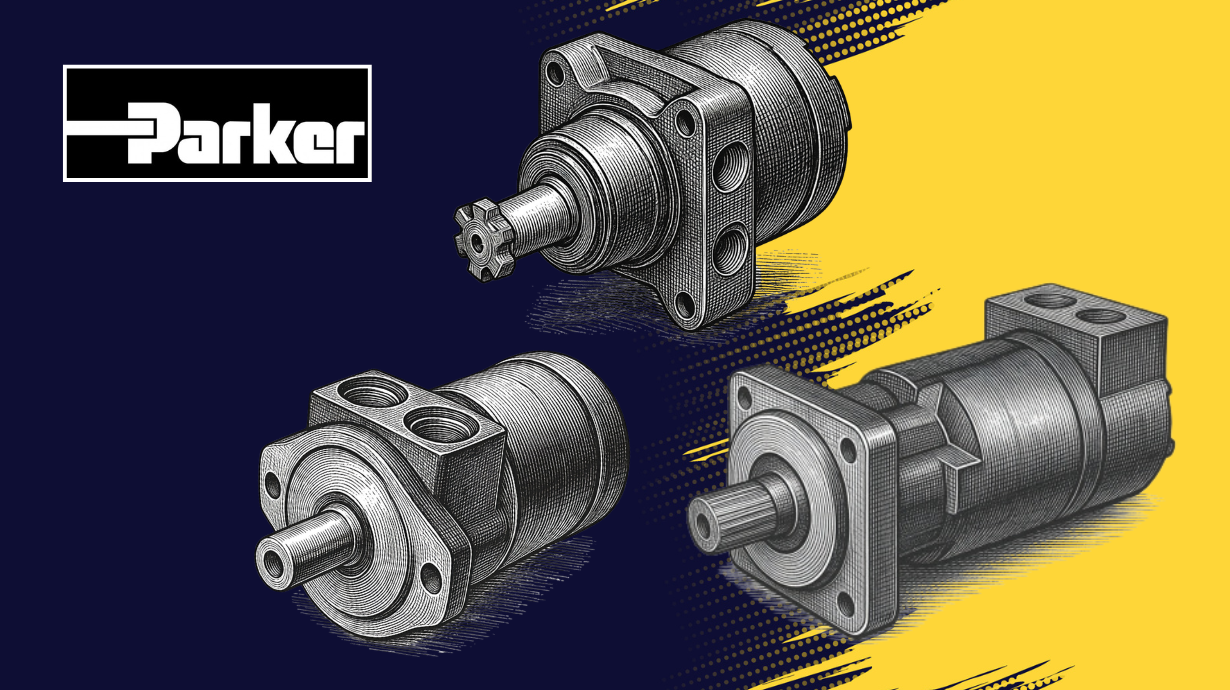
Low-speed high-torque (LSHT) hydraulic motors are designed to deliver compact, robust, and controllable rotary power at low operating speeds, making them ideal for mobile machinery and industrial equipment used in agricultural, construction, in-plant and turf.
But not all LSHT motors perform the same in the field. Long-term reliability and performance often depend on factors that go beyond basic torque and speed requirements.
Factors like pressure management, contamination control, mounting conditions, and internal motor design can all influence long-term performance, maintenance requirements, and service life. Understanding these considerations upfront can help improve reliability, reduce downtime, and lower total cost of ownership over time.
Here are the four important factors to evaluate when selecting an LSHT motor for your application:
#1: Internal Lubrication
Insufficient lubrication can increase drivetrain wear, reduce efficiency, and shorten service life especially in demanding duty cycles. Parker’s Torqmotor™ design uses full-flow drivetrain lubrication to continuously cool, lubricate, and flush internal components during operation resulting in a more durable and mechanically efficient drivetrain.
#2: Pressure Management and Seal Design
Many LSHT motors require a dedicated case drain line to manage internal leakage oil and prevent pressure buildup inside the motor housing. If the drain line is restricted or improperly routed, internal pressure can increase wear on shaft seals, create leakage issues, and impact long-term reliability.
LSHT motors that use full-pressure shaft seals and a two-pressure-zone design eliminate the need for a case drain line. This simplifies plumbing, minimizes leak points, and helps improve reliability in high-pressure operating conditions.
#3: Bearings
LSHT motors are often used in applications that place significant side loading on the motor shaft. If bearing capacity and mounting conditions aren’t properly considered, excessive radial or axial loads can contribute to premature bearing wear, shaft damage, vibration issues and reduced service life. This is especially common in mobile equipment and wheel-drive applications where loads constantly shift during operation.
Parker Torqmotor™ has the largest bearings, widest bearing stance and higher radial load capability. This improves side load performance and reduces the need for additional outboard bearings.
#4: Low Speed Smoothness
Low-speed operation is one of the biggest reasons LSHT motors are used in the first place — but not every motor performs equally well at very low rpm.
Some motors experience “cogging,” or uneven rotational movement, especially during startup or low-speed operation under load. In applications requiring precise control or smooth movement, this can affect machine performance and operator experience.
Internal motor design plays a major role in smoothness and starting torque performance. Parker’s Torqmotor™ platform uses high-speed rotor valving technology designed to improve low-speed smoothness and eliminate cogging during operation.
Choosing the Right LSHT Motor: From Selection to Sourcing
Built to fit a wide range of applications, the Parker Torqmotor™ lineup includes compact options with a 1-inch output shaft as well as larger motors with output shafts > 1 inch. Multiple performance tiers let you balance side load capability, pressure requirements, and cost based on what your application demands.
With manufacturing in Greeneville, Tennessee, these motors are proudly made in the USA with a 20-day delivery program.
Need help selecting the right LSHT motor for your application? Our team can work with you to compare motor types, confirm operating pressure and flow, and evaluate duty cycle and side-load requirements. Connect with our team of hydraulic engineers to get started.
Short Code:
Credit Limit:
Current Balance:
