
Spill Tackle vs. Clay Absorbents: What’s the Difference?
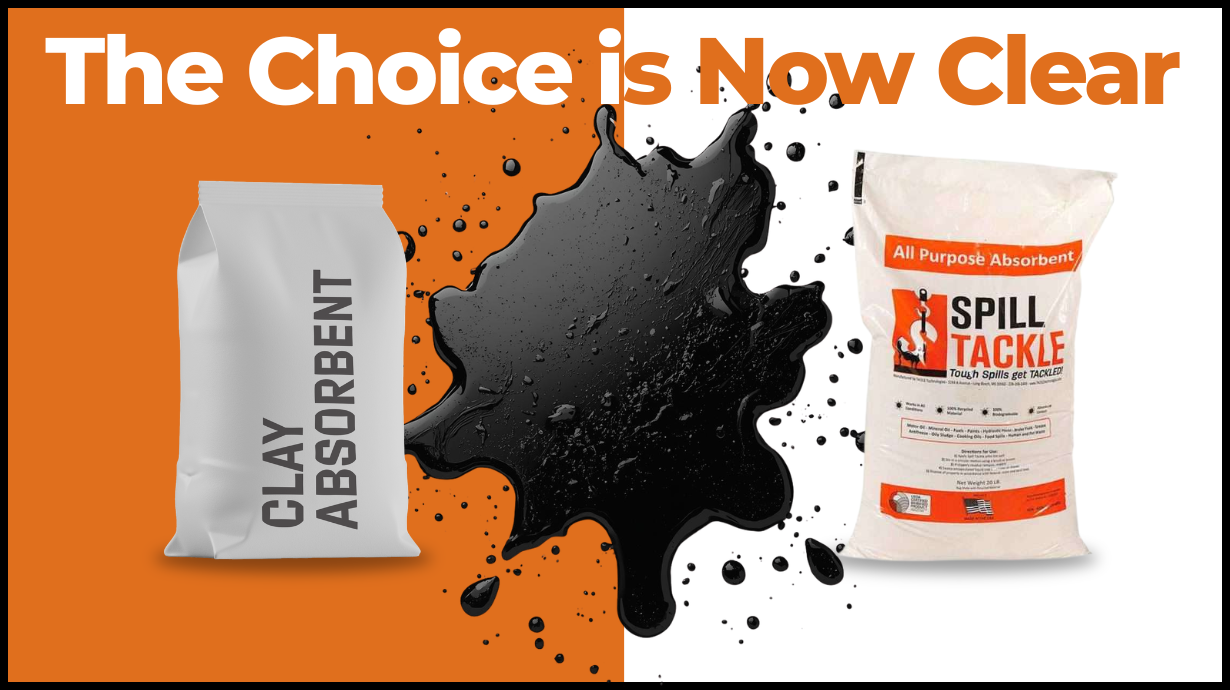
Traditional clay absorbents have long been used to manage oil, fuel, and chemical spills in industrial environments. However, they often require large quantities, create dust, and can slow cleanup operations. Spill Tackle absorbent products offer an alternative designed to improve efficiency, safety, and environmental impact. So, how does Spill Tackle stack up against traditional clay?
Absorption Efficiency
Spill Tackle can absorb up to 8-10 gallons per gallon of fluid using only about 20 lbs. of product, whereas traditional clay absorbents require approximately 120 lbs. to absorb the same amount of liquid. Additionally, Spill Tackle works within seconds, while clay absorbents can take hours to soak up fluids.
Cleanup Speed and Surface Results
When applied, Spill Tackle encapsulates spills instantly, leaving the surface clean and dry without the need for prolonged waiting periods or secondary cleaning. In contrast, clay absorbents only coat the spill, often leaving a slick residue that can require further cleaning and slow down operations. This makes Spill Tackle ideal for rapid spill response, reducing slip-and-fall hazards and workplace downtime.
Worker Safety and Health Risks
Traditional clay absorbents contain crystalline silica, which is a known carcinogen and respiratory hazard if inhaled over time. They are also dusty and heavy, increasing the risk of injuries from lifting or handling large bags. Spill Tackle, on the other hand, is dust-free, non-toxic, and biodegradable, eliminating these health hazards while being easier to handle.
Environmental and Disposal Impact
Spill Tackle is USDA bio-preferred, sustainable, and USEPA leachate tested, meaning it can decompose naturally and reduces landfill disposal concerns. Clay absorbents generate larger quantities of waste, which are non-biodegradable and can be more costly to dispose of.
Cost Savings Over Traditional Clay
Because Spill Tackle uses less material to handle the same spill, the overall cost of absorbent needed for cleanup is lower compared to traditional spill absorbents. Cleaning a typical spill requires significantly less product, which reduces the total material expense. In addition, less handling, quicker cleanup times, and smaller volumes of waste for disposal help lower overall operational costs.
Types of Liquids Spill Tackle can Absorb
Spill Tackle can absorb oil, hydraulic fluids, diesel, cooking oils, latex, and paints, making it suitable for a wide range of industrial and commercial spills. Clay absorbents are limited in their effectiveness, especially with synthetic or reactive chemicals, and can sometimes fail to contain or fully absorb certain fluids.
Summary of the Key Advantages
- Higher absorption: Up to 6x more efficient by weight.
- Faster cleanup: Works in seconds, surface left clean and dry.
- Safer: Dust-free, non-carcinogenic, lighter to handle.
- Eco-friendly: Biodegradable, sustainable, and reduces landfill impact.
- Cost-effective: Requires less product, reduces labor and disposal costs.
- Versatile: Handles a broad range of fluids, including hydrocarbons and paints.
The Bottom Line
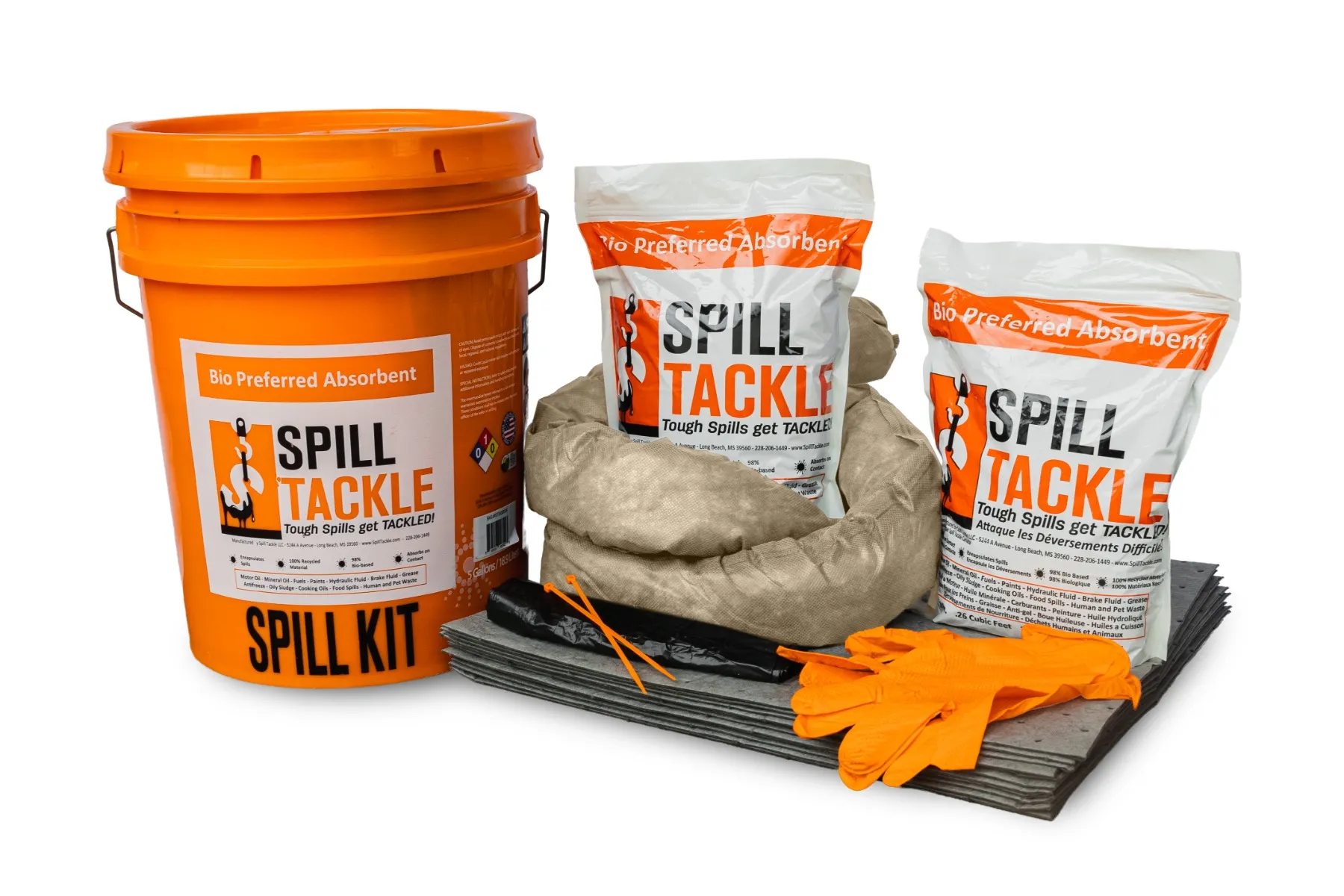
Spill Tackle offers superior performance and safety benefits over traditional clay absorbents for industrial, municipal, and home spill management applications. It minimizes cleanup time, reduces health risks, lowers operational expenses, and is more environmentally responsible.
If your facility is still relying on traditional spill absorbents, upgrading to modern absorbent technology can significantly improve spill response efficiency. Learn more about Spill Tackle products or contact our team to find the right absorbent solution for your application.
Short Code:
Credit Limit:
Current Balance:
