
Battling the Elements: Preventing Moisture Failures in Outdoor Pneumatic Systems
At Triad, we understand that moving your pneumatic applications outdoors presents a unique set of challenges, particularly when it comes to compressed air quality. Many facilities generate compressed air indoors and then pipe it outside to power valves, actuators, and pneumatic cylinders. However, this transition is the root cause of most outdoor pneumatic failures.
When warm, moisture-laden air travels into a colder outdoor environment, the temperature drop causes condensation to form inside the air lines. This destructive moisture then travels downstream, attacking your most expensive pneumatic components. The typical—and costly—results include sluggish or sticking valves, corrosion damage, compromised seals, debilitating air leaks, and dreaded freeze-ups in cold weather. In nearly every case, an outdoor pneumatic system failure is, at its core, an air quality failure.
The good news is that these common issues are entirely preventable. Protecting your system requires a proactive approach to compressed air treatment and intelligent system design.
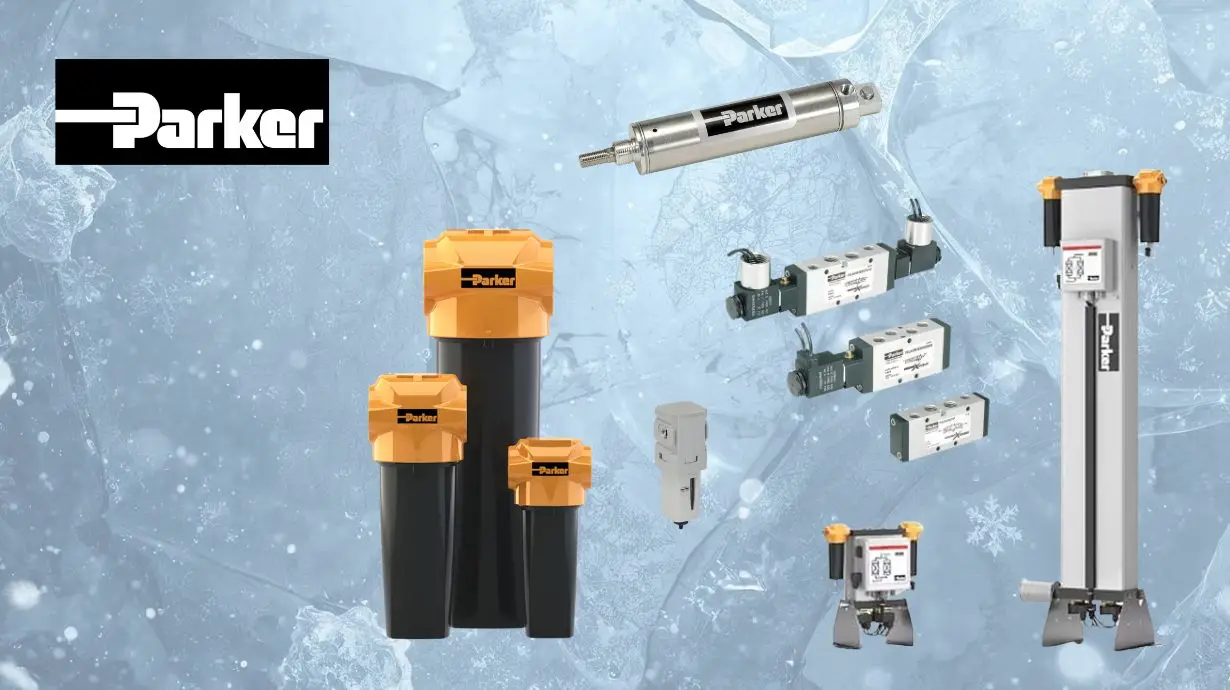
• Stop Water Before It Leaves the Building: Implement a high-efficiency air filter or water separator with an automatic drain right at the indoor-to-outdoor transition point. Products like Parker’s OIL-X Compressed Air Filters are designed to effectively remove bulk water before the air even reaches the cold outdoor air line.
• Point-of-Use Air Preparation: Condensation can still form after the air leaves the building. Install a dedicated, outdoor-rated Global FRL Filters (Particulate/Coalescing/Adsorber) unit near the equipment to act as a point-of-use air preparation system. This ensures the air is clean, dry, and regulated immediately before it enters your pneumatic equipment.
• Design Piping to Manage Condensation: Use gravity to your advantage in your system design. Slope air lines away from your equipment, avoid creating low points where water can collect, and install drip legs with automatic drains at strategic points. This system layout ensures water is continuously removed before it reaches sensitive components like solenoid valves and pneumatic actuators.
• Minimize or Eliminate Lubrication: Opt for lubrication-free valves and cylinders whenever possible. Excess lubrication can combine with moisture and dust to form sludge, which dramatically reduces the long-term reliability of your pneumatic components in harsh outdoor applications.
• Select Components Built for Outdoor Duty: Choose pneumatic components specifically rated for outdoor use. This includes selecting products made from corrosion-resistant materials, sealed valve bodies like the Parker Viking Xtreme Series Pneumatic Solenoid Valve, and cylinders with stainless steel or coated rods, such as the Parker SR/SRM Series Pneumatic Round Body Cylinder. Always ensure seals are temperature-rated for your specific environment.
• Consider Dry Air for Critical Applications: For highly sensitive or mission-critical systems, or those operating in extremely cold or fluctuating climates, consider adding a desiccant dryer upstream. A compressed air dryer dramatically lowers the dew point of the air, virtually eliminating condensation and preventing costly seasonal failures. Parker’s Compressed Air Dryers provide the ultimate in air treatment for system reliability.
Outdoor pneumatic failures are rarely the result of poor component quality; they are almost always caused by moisture that wasn't adequately removed or managed upstream. The key to maximizing equipment life and minimizing downtime is a three-pronged approach: prepare the air before it goes outside, condition it again at the point of use, and design the system with the assumption that water will show up—because it always does.
Our team at Triad Technologies specializes in advanced fluid power and pneumatic solutions. We can review your specific outdoor application and recommend the proper air preparation equipment, valves, cylinders, and system layout to ensure reliable, long-term operation in any environment. Connect with a specialist today to optimize your current outdoor pneumatic system.
Short Code:
Credit Limit:
Current Balance:
