
Selection, Simplified: 7 Essential Steps for Accurate Cylinder Specification
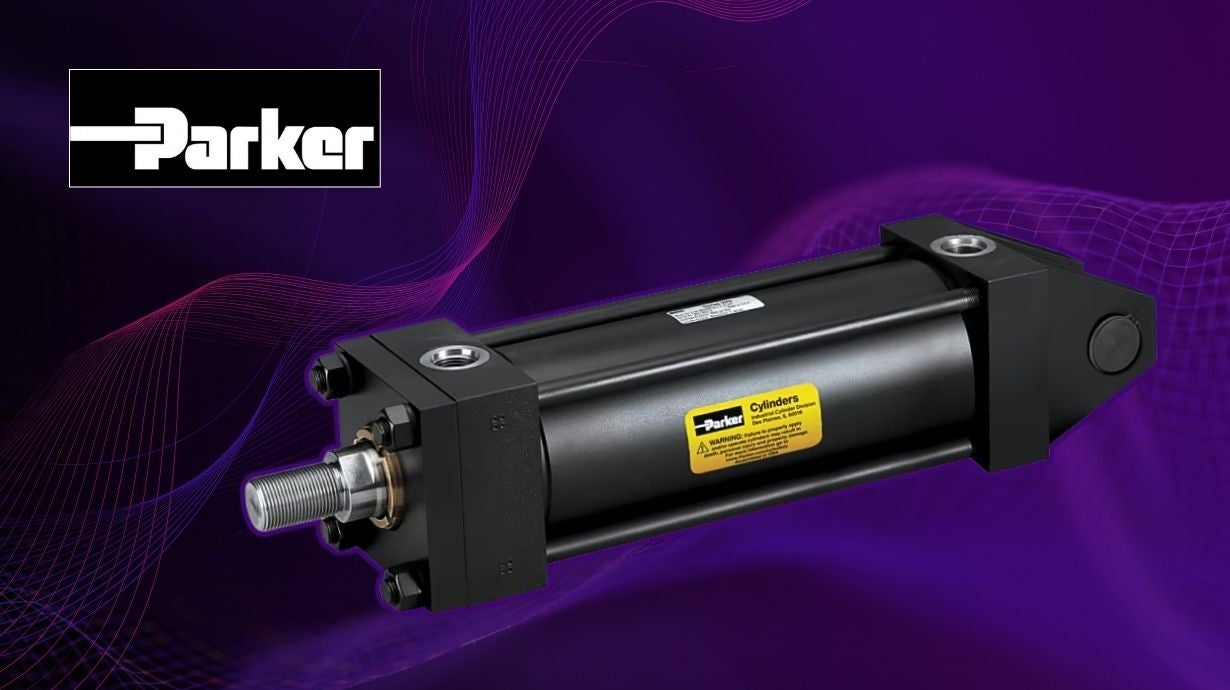
As a leading distributor of Parker Hannifin cylinders, Triad knows that finding the perfect solution for your application can be challenging. Ensuring you get the best cylinder for the job protects your investment and prevents costly downtime caused by premature failure. For quick reference, we’ve compiled a list of key principles for cylinder selection, making it easy for our team to correctly select and size your next hydraulic or pneumatic cylinder.
1. Select Your Cylinder Type: Hydraulic vs. Pneumatic
Hydraulic Cylinders: Best for applications requiring high force (high pressure) and precise control. These cylinders operate more slowly, but can handle heavier loads.
Pneumatic Cylinders: Ideal for lighter loads and faster, repetitive movements. These cylinders are ideal for low-pressure applications (up to 250 psi) and are generally easier and cleaner to operate.
2. Determine Required System Capacity & Bore Size
Medium-Duty Systems: A majority of industrial systems are medium-duty, requiring roughly 1000 PSI.
Heavy-Duty Systems: These systems require higher pressures (roughly 3000 PSI) for heavy-duty applications like hydraulic presses and automotive applications.
Bore Size: The required bore size is determined by the push or pull force required by your system. Today, virtually every industrial requirement can be met with NFPA standard and/or ISO-compliant bore sizes.
Retract Force: Note that a double-acting cylinder with a single rod retracts with less force than it extends due to the piston rod taking up some of the piston area on the rod side of the cylinder.
3. Determine Stroke Length
Stroke Length: This is the required travel distance of your cylinder rod. Be precise, as the stroke affects the potential for rod buckling and/or rod sag (sag only an issue for horizontally mounted cylinder applications). Therefore, longer stroke lengths may limit the thrust capacity.
Rod Buckling: The longer the stroke, the more likely the rod is to bend under pressure. This can be prevented with stronger materials, a thicker rod diameter, or the use of a stop tube.
Stop Tube: For very long stroke cylinders, a stop tube increases the bearing support area but restricts the extended position of the rod. All to help prevent rod buckling and premature wear of the bearing surfaces.
4. Additional Sizing & Material Requirements
Piston Rod Size: This is the most commonly customized cylinder component. When determining size, consider the push/pull force needed, as well as stroke length, since these can all affect the minimum diameter required.
Rod Ends/Threading: Options are standardized, so customizations are rarely needed.
Cylinder Body Tube: Most applications can be supported by a plain steel or chrome-plated cylinder body, though alloys may be useful for unique environments (such as underwater).
5. Speed & Sealing Requirements
Average Speed: As a general rule of thumb, the average hydraulic cylinder with typical standard seals can handle speeds up to 3.28 feet (1 meter) per second.
High Speed: High-speed applications often require a low-friction seal to manage kinetic energy and reduce wear. However, for high-temperature applications, a more robust sealing solution may be necessary.
6. Confirm Pressure & Temperature
Pressure Rating: Ensure the cylinder’s nominal pressure rating exceeds your system's maximum operating pressure.
Temperature: Extreme operating temperatures (both high and low) may require specialized parts, such as seals or custom metal components, to operate effectively. Work with an engineer to ensure all parts of your cylinder are equipped for your operating environment.
7. Choose Your Ideal Mounting Style & Configuration
Fixed Centerline Mounts: This style of mount, designed for stationary applications, absorbs force along the cylinder’s centerline and is the generally preferred mount for both thrust (push) and tension (pull) applications.
Pivot Centerline Mounts: Similar to fixed centerline mounts, this mount type also absorbs force along the cylinder’s centerline. However, this style also allows for angular movement, making it more suitable for applications like mobile equipment.
Fixed Mounts Supported Below the Centerline: These mounts are supported by the surface below the cylinder.
Cylinder Configurations: Configuration depends on where the force needs to be applied. Consult with a cylinder expert to determine the best configuration for your application.
Parker Hannifin offers one of the widest ranges of cylinders on the market. We carry several of their most popular series, including:
| Cylinder Type | Series Name | Duty/Standard | Key Feature |
| Hydraulic | Series 2H/3H | Heavy Duty (NFPA) | Industry-standard tie-rod design rated for 3,000 PSI service |
| Hydraulic | Series 3L | Medium Duty (NFPA) | Ideal for 1,000 PSI industrial applications where a robust tie-rod design is needed |
| Hydraulic | Series HMI | Heavy Duty (ISO) | Meets ISO 6020/2 standards, perfect for metric systems and global machinery |
| Pneumatic | Series 2A | Heavy Duty (NFPA) | Premium tie-rod air cylinder rated up to 250 psi for long, maintenance-free life |
| Pneumatic | Series 4MA | Medium Duty (NFPA) | A lightweight, aluminum option ideal for standard factory automation tasks |
Stop the guesswork when it comes to cylinder specification! The fastest way to ensure you select the correct Parker Hannifin cylinder is to partner with an expert. Our team at Triad Technologies has the engineering expertise to calculate and configure the exact cylinder your machine needs. Contact us today to get started! You can also visit Parker’s website to request a more in-depth Cylinder Specification Guide.
Short Code:
Credit Limit:
Current Balance:
