
O-Ring Materials: How to Choose the Right Material for Your Application
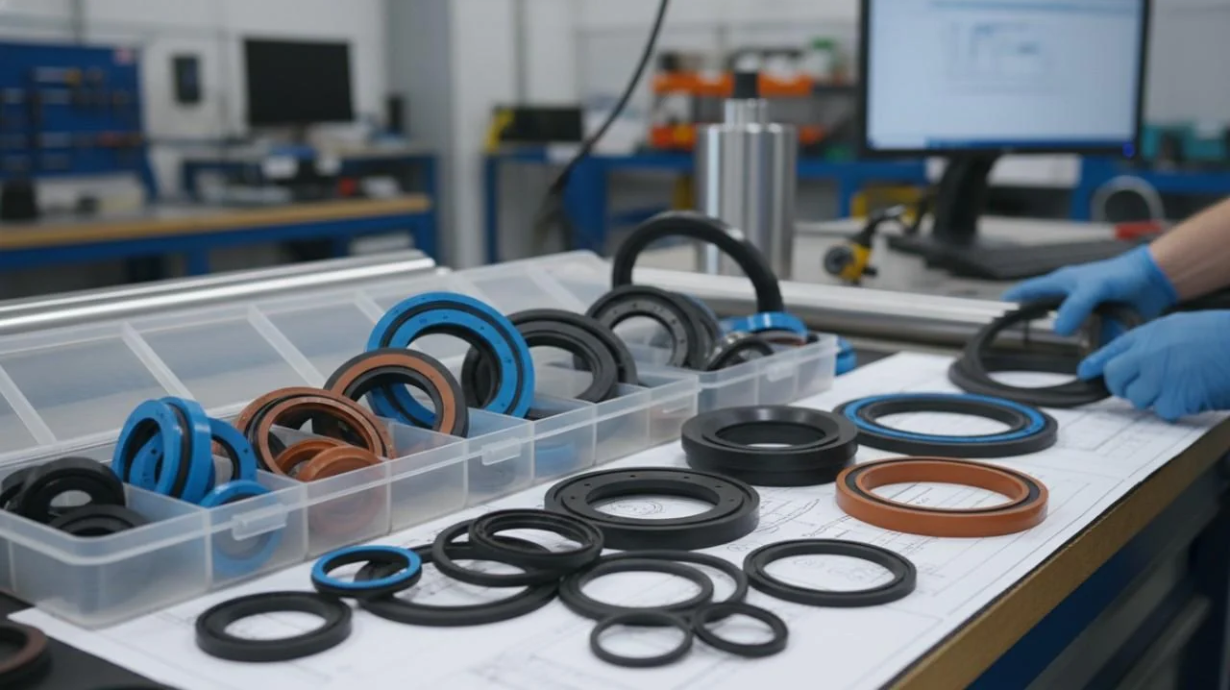
O-rings play an important role in preventing leaks and maintaining reliable sealing performance across a wide range of industrial applications. While they may look similar, the material they're made from can have a significant impact on how they perform.
Temperature, fluid compatibility, pressure, and environmental conditions all influence which material is best suited for an application. Choosing the wrong material can lead to premature wear, seal failure, and unnecessary downtime.
So, how do you know which material to choose?
Below, we've broken down several common O-ring materials, their key properties, and the applications where they're typically used.
Explore O-Ring Materials
NBR
Nitrile / Buna-N
TYPICAL TEMPERATURE RANGE
-30°F to +200°F
General guideline; actual limits depend on compound and application.
Excellent resistance to water, hot water, steam, glycol-based fluids, ozone, and weathering. A versatile, cost-effective material commonly used in general industrial sealing applications.
Key Properties
Good resistance to petroleum-based oils, greases, fuels, and many hydraulic fluids.
Selection Considerations
Limited resistance to ozone, weathering, steam, and many polar solvents.
Common Applications
Hydraulic systems, lubrication equipment, and general oil service.
EPDM
Ethylene Propylene
TYPICAL TEMPERATURE RANGE
-30°F to +300°F
General guideline; actual limits depend on compound and application.
A strong choice for applications involving water, steam, and outdoor environmental exposure.
Key Properties
Excellent resistance to water, hot water, steam, glycol-based fluids, ozone, and weathering.
Selection Considerations
Generally incompatible with petroleum oils and hydrocarbon fuels.
Common Applications
Water systems, steam applications, outdoor equipment, and glycol cooling systems.
HNBR
Hydrogenated Nitrile
TYPICAL TEMPERATURE RANGE
-25°F to +300°F
General guideline; actual limits depend on compound and application.
Offers improved heat resistance and mechanical performance compared with conventional nitrile.
Key Properties
Good oil and fuel resistance, with improved heat and mechanical properties.
Selection Considerations
Compatibility with aggressive solvents and chemicals should be verified.
Common Applications
Mobile equipment, automotive systems, higher-temperature oil service, and demanding hydraulic applications.
FKM
Fluorocarbon
TYPICAL TEMPERATURE RANGE
-15°F to +400°F
General guideline; actual limits depend on compound and application.
Designed for demanding applications that require resistance to heat, oils, fuels, and many chemicals.
Key Properties
Excellent resistance to many oils, fuels, hydrocarbons, and industrial chemicals.
Selection Considerations
Not universally chemically resistant. Hot water, steam, certain amines, bases, and low-temperature conditions may require another compound.
Common Applications
High-temperature oil and fuel systems, chemical processing, and industrial sealing.
VMQ
Silicone
TYPICAL TEMPERATURE RANGE
-65°F to +400°F
General guideline; actual limits depend on compound and application.
Particularly useful in applications requiring flexibility across a wide temperature range.
Key Properties
Excellent temperature flexibility, particularly in low-temperature environments.
Selection Considerations
Typically offers lower mechanical strength and wear resistance than many other elastomers. Chemical compatibility varies.
Common Applications
Extreme-temperature static sealing and applications requiring low-temperature flexibility.
FFKM
Perfluoroelastomer
TYPICAL TEMPERATURE RANGE
Grade dependent; specialty grades can exceed 500°F
General guideline; actual limits depend on compound and application.
A high-performance sealing material designed for some of the most demanding chemical and temperature environments.
Key Properties
Exceptional resistance to a broad range of aggressive chemicals while maintaining an elastomeric sealing response.
Selection Considerations
Significantly more expensive than conventional elastomers. Performance and temperature limits vary by grade.
Common Applications
Semiconductor equipment, pharmaceutical manufacturing, chemical processing, and critical applications where seal failure is costly.
FEPM
TFE/Propylene (AFLAS®)
TYPICAL TEMPERATURE RANGE
Approximately -10°F to +400°F
General guideline; actual limits depend on compound and application.
A specialized elastomer known for handling challenging chemical and industrial environments.
Key Properties
Resistance to a number of acids, bases, amines, steam, and aggressive industrial fluids.
Selection Considerations
Chemical compatibility differs from FKM. Always verify compatibility with the specific compound.
Common Applications
Chemical processing, oilfield equipment, steam systems, and aggressive fluid applications.
PTFE
Polytetrafluoroethylene
TYPICAL TEMPERATURE RANGE
Approximately -65°F to +500°F
General guideline; actual limits depend on compound and application.
A low-friction material with exceptional chemical resistance for applications where traditional elastomers may struggle.
Key Properties
Excellent resistance to a broad range of chemicals and high temperatures, with very low friction.
Selection Considerations
PTFE is not an elastomer and does not rebound like rubber. Seal configuration, gland design, pressure, and energization are important considerations.
Common Applications
Aggressive chemical applications, high-temperature environments, and low-friction sealing requirements.
Note: Temperature ranges are general guidelines and can vary depending on the specific compound, manufacturer, and application conditions.
What to Consider When Selecting an O-Ring Material
Selecting an O-ring material involves more than matching a temperature range. The material must be compatible with the conditions it will encounter throughout its service life.
Here are a few important factors to consider:
- Fluid Compatibility: Will the O-ring come into contact with oils, fuels, water, chemicals, or other media?
- Pressure: What pressure conditions will the seal need to withstand?
- Application Type: Will the O-ring be used in a static or dynamic sealing application?
- Environment: Will it be exposed to UV light, ozone, moisture, or other environmental conditions?
- Service Life: What level of durability and performance does the application require?
Find the Right O-Ring for Your Application
There isn't one O-ring material that works for every application. The right choice depends on the combination of operating conditions, material properties, and performance requirements.
Triad Technologies works with customers to identify sealing solutions that align with their application needs. Whether you're replacing an existing seal or specifying a material for a new design, our team can help you navigate your options.
Need help selecting an O-ring material? Contact us to discuss your application.
Short Code:
Credit Limit:
Current Balance:
