
5 Tips for Safe Hose Assemblies
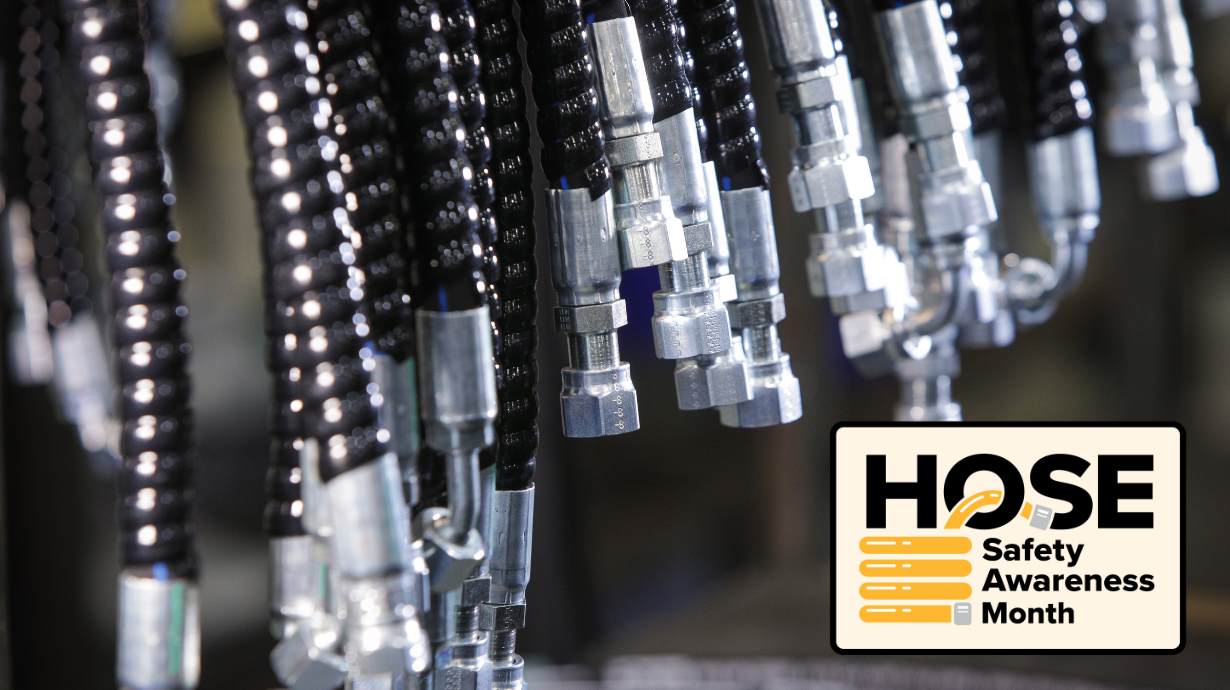
September is Hose Safety Awareness Month, an initiative from NAHAD dedicated to promoting safer practices throughout the hose industry.
From selecting the right components to inspecting assemblies already in service, hose safety requires attention throughout the entire lifecycle of an assembly. A small oversight, such as improper routing, incorrect component selection, or missed signs of wear, can lead to downtime, equipment damage, and potential safety risks.
In recognition of Hose Safety Awareness Month, here are five ways to help improve hose assembly safety.
1. Start With the Application
The STAMPED method is a framework promoted by NAHAD to help identify the requirements of a hose application. STAMPED stands for size, temperature, application, material, pressure, ends, and delivery and helps determine the correct hose and fittings for your application. Before selecting a hose and fittings, consider the operating conditions:
- S – Size: Inside diameter (ID) and length
- T – Temperature: Media temperature
- A – Application: Working conditions and external exposure
- M – Media: Fluid or gas type, and concentration
- P – Pressure: Maximum working pressure
- E - Ends: Fitting style, type, orientation, and attachment
- D -Delivery: Testing, quality, packaging, and shipping needs
The goal is simple: understand how the assembly will be used before determining what components should be used.
Ask the right questions before the assembly reaches the crimper.
2. Proper Components Still Require Proper Assembly
Selecting the right hose and fittings is only part of the equation. The fabrication process must also follow manufacturer specifications and established procedures. Even quality components can become a safety concern when assembled incorrectly.
Key assembly considerations include:
Compatibility
Use hose and fittings designed to work together.
Specifications
Follow manufacturer-recommended crimp dimensions and assembly procedures.
Equipment
Keep fabrication equipment properly maintained and calibrated.
Training
Make sure personnel understand the procedures and requirements involved in building an assembly.
3. Don't Let Installation Create a Problem
A hose can be properly selected and assembled and still fail prematurely because of how it is installed. Poor routing can create unnecessary stress through excessive bending, twisting, stretching, or abrasion.
During installation, watch for:
- Sharp edges and abrasive surfaces
- Excessive bending
- Twisting
- Insufficient room for equipment movement
- Exposure to excessive heat
- Routing that exceeds the hose's recommended bend radius
Think beyond the connection points and consider how the entire hose assembly moves and interacts with the surrounding equipment. A properly installed hose should have the room to work, not fight against its environment.
4. Make Inspection Part of the Routine
Hoses rarely choose a convenient time to fail. Regular inspections can help identify potential issues before they turn into unexpected downtime or a more serious safety concern.
Look for visible warning signs such as:
- Abrasion or worn cover
- Cuts or cracks
- Kinking
- Stretching
- Pinholes or leaks
- Damaged fittings
- Corrosion
- Signs of twisting or excessive stress
But don't stop at the hose itself. Inspect the entire assembly, including fittings, connections, routing, and the surrounding environment.
5. Treat Hose Safety as an Ongoing Process
Hose safety isn't something to consider only when an assembly is fabricated or after a problem occurs. It requires consistent attention throughout the life of the equipment.
A stronger hose safety program may include:
- Ongoing employee training
- Consistent assembly procedures
- Routine inspections
- Documented maintenance practices
- Regular conversations about safety
Hose Safety Awareness Month is a good reminder to evaluate current practices, with the goal to enhance and carry those habits forward throughout the year.
Safer Hose Assemblies Start with the Details
Safe hose assemblies start with understanding the application. It continues through proper component selection and assembly. And it requires attention during installation, inspection, and maintenance. Those details matter because hose assemblies are critical to keeping equipment and operations moving.
This September, take the opportunity to evaluate your hose safety practices, and consider where small improvements could help prevent larger problems down the road.
At Triad Technologies, our team can help you with training and best practices to support your operation. Contact us to talk with a hose and fluid power specialist about your application.
Short Code:
Credit Limit:
Current Balance:
