
5 Ways Your Plant Could Be Wasting Compressed Air
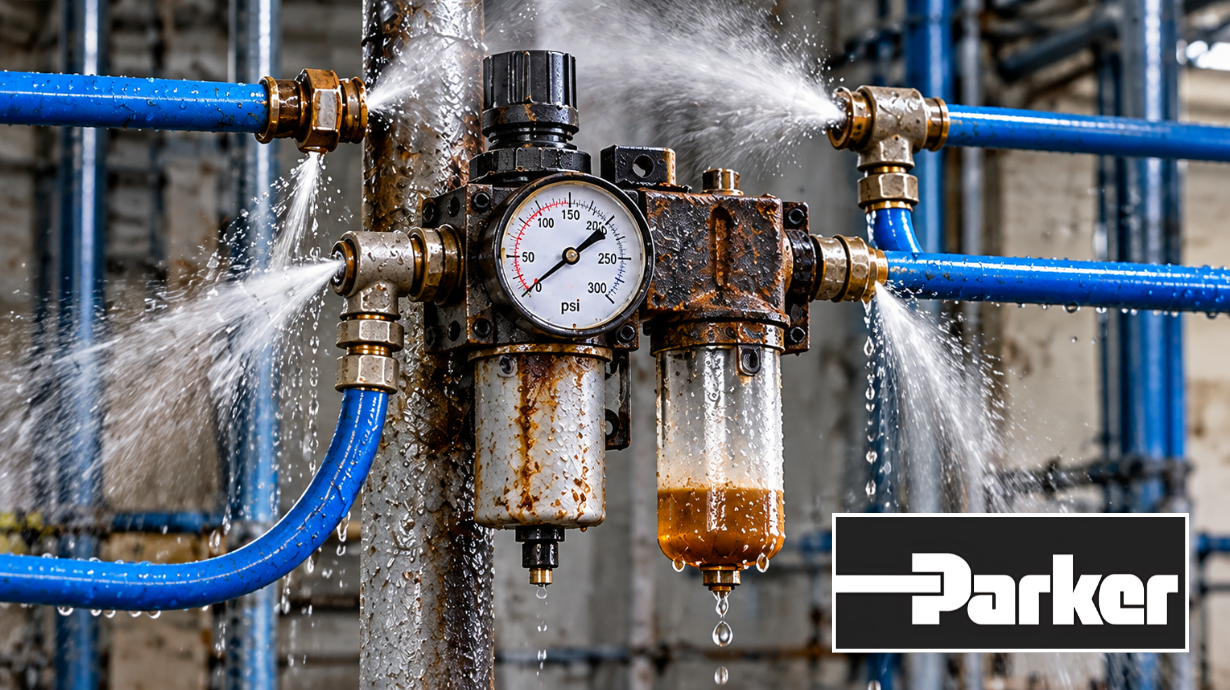
Compressed air is one of the most useful utilities in a manufacturing facility and one of the most expensive.
The challenge is that compressed-air waste is not always obvious. A plant can lose efficiency through small leaks, excessive pressure, inefficient blow-off applications, improperly sized components, and pressure drops throughout the distribution system.
The good news? Improving compressed-air efficiency does not always require a complete system overhaul. Often, it starts by identifying where air is being used unnecessarily.
Here are five common areas to look at.
1. Running More Pressure Than the Application Needs
More pressure is not always better. Many facilities maintain a high system pressure because one machine or process requires it. The result is that other pneumatic devices may be operating at a higher pressure than necessary.
That can lead to increased air consumption, additional component wear, and more leakage throughout the system. That extra pressure comes at a cost.
A better approach is to determine the pressure actually required at the point of use and regulate individual applications accordingly.
Parker air-preparation products, including the Global FRL family of filters, regulators, filter/regulators, and related components, can help control pressure locally while maintaining consistent air preparation at the machine.
Instead of asking how much pressure is available, ask: How much pressure does the application actually need?
Regulating pressure at the point of use can help ensure each application receives the pressure required for reliable performance, without using more compressed air than necessary.
2. Ignoring Compressed-Air Leaks
Leaks are one of the most common sources of wasted compressed air.
A small leak from a fitting, tube connection, hose, valve, or cylinder seal may not seem significant by itself. Multiply that leak across dozens or hundreds of components operating around the clock, and the cost can become substantial.
Common leak points include:
- Push-to-connect fittings
- Damaged tubing
- Hose assemblies
- Valve and cylinder seals
- Threaded connections
- Regulators
- Quick disconnects
Leaks also force the compressor system to work harder to maintain plant pressure. Regular leak detection and maintenance can help identify these issues before they become a larger source of wasted energy. Using reliable fittings, tubing, valves, and pneumatic components can also help reduce potential leak points throughout the system.
When leaking connections or aging tubing are identified, Parker Prestolok push-to-connect fittings and pneumatic tubing provide options for repairing or upgrading those connection points. The important thing is not simply replacing a leaking fitting with another fitting. The entire connection should be evaluated, including tubing condition, tube preparation, thread condition, routing, and component wear.
3. Using Continuous Air for Blow-Off Applications
Blow-off applications are everywhere in manufacturing.
Compressed air may be used to:
- Clear chips or scrap
- Clean parts
- Dry surfaces
- Move lightweight material
- Cool components
- Clear tooling
- Remove debris from stamping dies
The issue is that many of these applications use continuous open airflow even though the process may only need a short burst of air. If an open nozzle blows for several seconds during every machine cycle, compressed-air consumption can add up quickly.
One way to address this is to convert continuous airflow into pulsed air. The Parker Air Saver Unit is designed specifically for this type of application. The Air Saver converts a continuous air blow into a series of ON/OFF pulses. During the OFF portion of the cycle, compressed air is not being consumed.
Parker states that the technology can reduce air consumption by up to 50% in appropriate blow-off applications.
What Could This Be Worth?
Parker’s Air Saver literature includes a sample application based on:
- 4 nozzles
- 6 mm nozzle diameter
- $0.10/kWh
- 1 minute of blow time per 4-minute cycle
- 3 shifts
- 5 days per week
In that example, the estimated reduced annual air-generating cost for all four nozzles is $3,568.13 per year.
The same example also estimates a reduction of approximately 23.07 tons of CO2 emissions annually. That is a useful illustration of how a relatively simple blow-off application can quietly become a meaningful operating cost when compressed air is allowed to run continuously.
Actual savings will vary based on nozzle size, operating hours, electrical cost, system pressure, compressor efficiency, and application duty cycle. The important part is evaluating the process first. Reducing air consumption only makes sense if the application still performs properly.
The goal is not simply to use less air. The goal is to use only the amount of air necessary to do the work.
4. Oversizing Pneumatic Components
When it comes to pneumatics, bigger is not always better. Oversized cylinders, valves, and tubing can increase air consumption without improving machine performance. For example, cylinder sizing should be based on the actual force required for the application:
Force = Pressure × Piston Area
A larger cylinder requires more air volume every time it cycles. If that additional force is not needed, the system may simply be using more compressed air than necessary.
Proper component sizing should consider factors such as:
- Required force
- Stroke length
- Speed
- Cycle rate
- Available pressure
- Load conditions
- Tubing length
- Valve flow capacity
Parker offers a broad range of pneumatic cylinders and actuators that can be selected around the actual requirements of the application, including 4MA, SR, LP, guided cylinders, and rodless actuator technologies.
Properly sizing the actuator, and then matching the valve, tubing, and flow requirements to it, can help avoid unnecessary compressed-air consumption while still providing the force, speed, and performance the machine requires.
This is also where working through the application with Triad can add value. Rather than simply replacing an existing component with the same size, we can look at the force, flow, pressure, speed, and cycle requirements to determine whether the existing pneumatic system is properly sized.
5. Losing Pressure Through Your Distribution System
Sometimes the issue is not the compressor, it is the path the air takes to reach the machine. Undersized piping, long runs, excessive fittings, contamination, and aging infrastructure can all contribute to pressure loss.
When pressure drops at the point of use, the common response is to increase compressor pressure. While that may address the immediate issue, it can also increase energy consumption across the entire facility. A properly designed compressed-air distribution system helps deliver the required flow and pressure to the machine with minimal pressure drop. Solutions like Parker Transair aluminum compressed-air piping can provide a flexible, corrosion-resistant option for compressed-air distribution while making it easier to modify the system as production needs change.
Start with the Application
Improving compressed-air efficiency does not necessarily mean replacing your entire pneumatic system.
Start by asking a few simple questions:
- What pressure does the application actually require?
- Are leaks contributing to unnecessary air loss?
- Can continuous blow-off be replaced with pulsed airflow?
- Are cylinders, valves, and tubing properly sized?
- Is the distribution system creating unnecessary pressure drop?
The answers can help identify opportunities to reduce compressed-air consumption while maintaining, or even improving, machine performance.
Small Changes Can Make a Big Difference
Compressed air is a valuable utility, and every unnecessary PSI, leak, or oversized component can contribute to higher operating costs. By optimizing pressure, addressing leaks, improving blow-off applications, properly sizing components, and reducing pressure loss, manufacturers can take meaningful steps toward a more efficient pneumatic system.
Triad Technologies works with Parker pneumatic technologies including cylinders, valves, air preparation, fittings, tubing, compressed-air piping, Air Saver products, and other air-management technologies. Whether you are troubleshooting a pressure issue, looking to reduce air consumption, or evaluating a new pneumatic application, our team can help identify the right solution.
Want to find out where your compressed air is going? Contact Triad Technologies and let's take a look at your application.
Short Code:
Credit Limit:
Current Balance:
